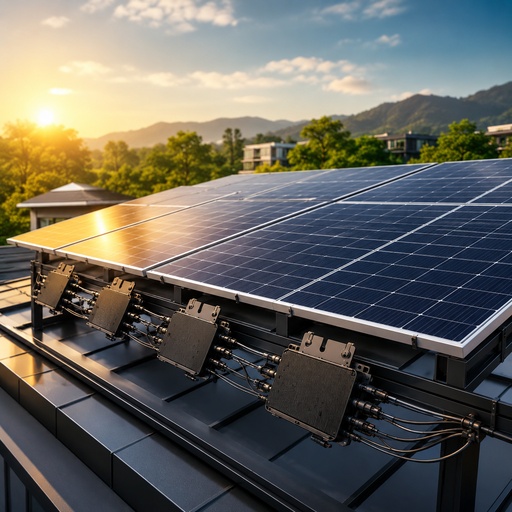
A Solar Power Plant with Micro Inverters is a solar system where each solar panel has a small inverter fixed behind it. This small inverter changes DC power from the panel into AC power that can be used in homes or buildings. Unlike a normal system that uses one big inverter for all panels, this system works panel by panel. It helps improve power output and makes the system more stable and safe. It is mostly used in homes and small commercial buildings.
Another simple way to understand it is that in this system, every solar panel works on its own. If one panel has a problem, the other panels continue to work normally. This gives better performance and steady electricity generation.
Significance
Micro inverter systems are important because they increase the total energy production of the solar plant. In normal systems, if one panel is shaded by a tree or building, the full system output may reduce. But in a micro inverter system, shading on one panel does not affect the other panels. This makes the system more reliable.
It also improves safety because there is less high-voltage DC wiring on the roof. This reduces fire risk and makes maintenance safer. It is a good option for rooftops where shadow problems are common.
Application
Solar power plants with micro inverters are mainly used in houses, villas, apartments, offices, schools, and small shops. They are best for rooftops where sunlight may not be equal on all panels. They are also useful in places where system monitoring is important. Homeowners who want better control and performance tracking often choose micro inverter systems.
Latest Technology / Development
Modern micro inverters come with smart monitoring systems. Users can check power production through mobile apps or online platforms. Many systems now support remote monitoring, which helps in quick problem detection. Some new models include rapid shutdown features for safety during emergencies.
There are also improvements in efficiency, meaning more power can be produced from the same sunlight. Some micro inverters now support battery connection, which helps store extra solar energy for night use.
Advantages
Micro inverter systems offer better performance because each panel works independently. They give higher energy output in shaded conditions. They provide easy monitoring of each panel. They improve safety due to lower DC voltage. Installation is flexible, and it is easy to expand the system by adding more panels later. They also reduce the chance of total system failure.
Compatibility
Micro inverters are compatible with most standard solar panels available in the market. They can be used in on-grid solar systems and some hybrid systems. They are suitable for both single-phase and three-phase connections depending on the building requirement. They also work well with smart meters and modern electrical systems.
Available Brands
Some popular brands that provide micro inverter systems include Enphase Energy, AP systems, Hoymiles, and Tata Power Solar. These brands offer quality products with warranty and monitoring support.
Micro inverter systems offer several clear benefits over traditional single-inverter setups. Because each panel works on its own, overall performance is better and more consistent, and a shaded or partly blocked panel does not drag down the output of the rest of the system. Owners also get the added benefit of monitoring and tracking each panel separately through an app, giving them a clearer picture of exactly how their system is performing at any time.
Safety is another strong point, since lower DC voltage on the roof reduces fire risk and makes maintenance work safer overall. The system is also easy to expand, as new panels can be added later without much difficulty, and installation stays flexible even on roofs with an unusual shape or panels facing different directions. Since every panel works independently, there is very little chance of the whole system failing at once, and when something does go wrong, it is far easier to find and fix, since each panel can be checked on its own
Micro inverters work with almost all standard solar panels sold today, so buyers are not locked into one specific panel brand. They fit well into on-grid solar systems and also work with certain hybrid setups, giving property owners flexibility in how they design their system. Depending on what a building needs, they can be wired for either single-phase or three-phase electrical connections, making them suitable for a wide range of homes and commercial spaces.
They also pair smoothly with smart meters and modern home electrical systems, and most newer models are built to work alongside home battery units as well. This makes micro inverters a flexible choice for houses, apartments, offices, and small commercial buildings alike, no matter what electrical setup the property already has in place.
Micro inverter technology has moved forward quickly in recent years, and today's models come packed with features that were not common before. Most modern units now connect to a mobile app or online dashboard, letting owners check how much power each panel is producing at any given moment, right from their phone. Many systems can also flag a problem the instant it happens, so issues get noticed and fixed much faster, without anyone needing to climb onto the roof to check.
Safety features have improved as well. New models include a rapid shutdown function, which quickly cuts power to the panels during an emergency such as a fire, keeping both firefighters and residents safer. On the performance side, engineers have improved the internal electronics of micro inverters so that more of the sunlight hitting each panel actually turns into usable electricity, without needing bigger or additional panels.
A growing number of micro inverters can now connect directly to home battery storage, so extra solar power made during the day can be saved and used again at night. Newer systems also store historical performance data for each panel, which helps installers and owners spot a slow drop in performance before it turns into a bigger issue. On top of this, units today are more compact and lighter than older models, making them quicker to install, and many brands now back their products with warranties of 20 to 25 years thanks to tougher, more weather-resistant builds.
Together, these updates mean today's micro inverter systems are smarter, safer, and easier to manage than the versions available even five years ago, and this trend is expected to continue as more homes move toward solar paired with battery backup.
Several well-known brands manufacture micro inverter systems, each with its own strengths. Enphase Energy is one of the most established names in the space, known for strong app-based monitoring and long warranty coverage. APsystems offers dual and quad micro inverter models, meaning a single unit can serve more than one panel at a time, which can help lower installation costs.
Hoymiles is known for compact, lightweight designs and competitive pricing, making it popular for both home and small commercial projects, while Tata Power Solar is a trusted Indian brand offering micro inverter solutions backed by a strong local support and service network. Across all these brands, buyers can expect dependable products backed by warranty coverage and app-based monitoring support, giving them confidence when choosing a system for their home or building.